Start here
Muay Thai on Samui: worth it?
Should you spend an evening at a Muay Thai card on Koh Samui, and can kids come? What the ticket covers, how a card runs and who should pick something else.
Pick your fight night ↗Quick answer
Yes, if you want a real contest and can watch people fight. The ticket buys a seat at Phetch Buncha Boxing Stadium in the Chaweng area, the opening ritual and a card the booking page lists as eight scheduled bouts. Kids can come on a child ticket, sold by height, though the fighting is full contact. Transfers, meals and drinks are extra, and fights run on set nights only.
The short answer
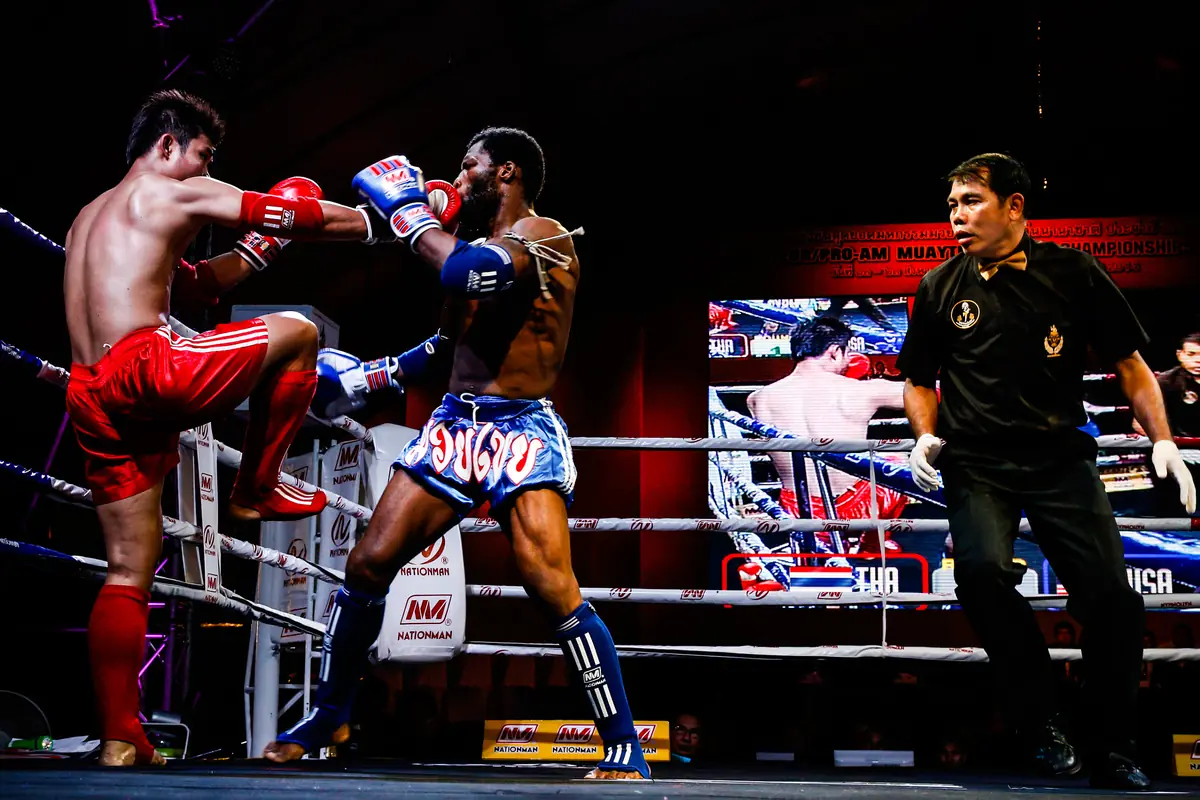
A fight night on Koh Samui is worth an evening if you want a sport rather than a staged show. You sit in a stadium with a fighter in each corner and watch a card of bouts that the booking page lists as eight. Each fighter opens with a ritual dance. The strikes land, some bouts end early, and nobody can promise what you will see. Cards change nightly and the booking page names no fighters. This guide sets out what the night involves, how to judge whether children should come, and when another Samui evening makes more sense.
What the ticket covers
One ticket is one seat for one night. The booking page lists a Muay Thai seat ticket plus entry to the Wai Khru Ram Muay ceremony, and it leaves out hotel transfers, food and beverages. Adult and child tickets follow height: an adult is taller than 130 cm, a child stands between 0 and 130 cm. Seating depends on the ticket type, the ticket is good for the chosen date only, and you are asked to turn up 15 minutes or more before the start. Free cancellation holds until 24 hours before, and the ticket is sold to all nationalities, Thai residents included.
What Muay Thai is
Wikipedia presents Muay Thai as a full-contact combat sport and martial art from Thailand, built on stand-up striking, sweeps and clinch work. People call it the art of eight limbs because fists, elbows, knees and shins all count as weapons. That is why a bout looks unlike boxing: kicks and knees are as common as punches, and fighters often grapple in the clinch rather than being pulled apart. What you will be watching is a sport with rules and rituals, and not something invented for tourists.
Is it OK to bring kids?
Children can attend: the booking page sells a child ticket for anyone up to 130 cm, and the other Samui stadium sets its own child ages. Whether your child should is your call, because the bouts are full contact and some end in a knockout. Older children who follow sport often enjoy the noise and the ritual. Younger or more sensitive children may not, and the stadium is described as air-conditioned, so pack a light layer. If you are unsure, choose a seat with some distance from the ring and be ready to leave between bouts.
Read next: How a Samui fight card runs
What the night is like
Every bout is preceded by the Wai Khru Ram Muay. Wikipedia calls it a ritual done before fighting, with fighters walking round the ring and bowing, and says the movements honour a fighter's teacher, parents and forebears. Music sets the pace: the article on sarama music says it opens slow and stately for the ritual and quickens once the fighting starts. A ticket guide to the island's stadiums mentions live commentary and Thai music at Phetch Buncha. Then the rounds run, and the verdict comes from a stoppage or the judges' cards.
Read next: Wai khru, mongkhon and music
How many bouts, and on which nights
The booking page lists eight scheduled bouts. A guide to the island's stadiums describes six fights as the norm and says the first one is often delayed, so the count and the pace can differ from night to night. Fights run on set nights of the week, not every night, and sources disagree on which nights a stadium uses. Treat the booking calendar as the only dependable list of nights with a card, and look at it before shaping the rest of your day around a fight.
What reviewers say, and where seats matter
On the booking page the night is rated 4.8 across about 1,350 reviews. Verified reviewers mention a lively crowd, good fighting for the price and views of the ring. The practical complaint repeated most is that the entry steps are not obvious: you buy online but still collect an admission ticket at the ticket office. One reviewer adds that the stadium is not very large, so the action is visible from most seats, while seats at the ring are worth having. Pick ringside if you want the sound and the sweat, and a standard seat if you want distance.
Where Muay Thai comes from
Wikipedia dates the sport's place at court to 1455, when it says Muay Thai was integrated with the Siamese royal court of Ayutthaya. It also records that hands were once bound with rope, and that fighters were later required to wear gloves, and that codified rules with referees and timed rounds arrived under King Rama VII. The same article notes that scholars describe the royalist-nationalist history of the sport as an invented tradition. Both can be true: the fighting is old, and the story told about it has been shaped to fit a national sport.
Fitting it into a Samui day
A fight card runs into the late evening, so it suits a day with a slow afternoon. Guides place Phetch Buncha in the Chaweng area, on the east coast, where Wikivoyage describes Chaweng as the largest and most popular of Samui's beaches, with lively nightlife. Eat first, because meals and drinks sit outside the ticket. If you would rather try the sport than watch it, a group class is the daytime alternative, and a short cabaret show is the lighter evening. Either one frees the night of a fight.
Who this isn't for
Give the fight night a miss if combat sports make you uneasy, since the bouts are genuine and can end in a knockout. Pass if you are after a dinner show with a set running order: the card shifts nightly and the booking page names no fighters. Pass too if a late evening is hard for you, loud crowds grate, or you need a guarantee about the number of bouts. For all of these, a daytime class or a cabaret evening is the easier plan.
Booking
Look in the calendar for a night with a card, then choose a ticket type and the number of adults and children. Tickets are booked with GetYourGuide, which takes payment and handles cancellations; free cancellation holds until 24 hours before the start. This guide is separate from the stadium, the promoter and the operator, and is not affiliated with any of them. Read the voucher for the exact steps, and leave time to swap it for an admission ticket when you arrive.
Frequently asked questions
Is Muay Thai on Koh Samui worth seeing?
Yes, for visitors who want a genuine contest and can handle watching one. The ticket covers a seat, the opening ritual and a card of bouts. Nothing is staged, so anyone uneasy about knockouts should skip it.
Is it OK to bring children?
Child tickets exist, set by height up to 130 cm. The bouts are full contact, so it depends on your child. Older children who like sport often enjoy it; younger or sensitive children may not.
How many bouts will I see?
The booking page lists eight scheduled bouts. A guide to the island's stadiums describes six as typical, and the first fight is often delayed, so the count and pace can differ.
Which nights do the fights run?
On set nights of the week. No day is named here because sources disagree and stadiums change them. The booking calendar shows which nights have a card.
Is anything else included?
No. The price buys the seat and the opening ritual. Hotel transfers, meals and drinks cost extra.
What should I wear?
Casual, comfortable clothes. One Bangkok guide advises avoiding revealing outfits out of respect for Thai culture, and the stadium is described as air-conditioned, so add a layer.
Sources