The ritual
Wai khru, mongkhon and music
What the dance before a Muay Thai bout means, why fighters wear a headband and armbands, and what the music is: the ritual explained for first-time visitors.
Pick your fight night ↗Quick answer
The Wai Khru Ram Muay is a ritual performed before fighting: fighters circle the ring and bow, showing respect to their teacher, parents and ancestors. Many fighters enter the ring in a mongkhon headband and pra jiad armbands. Music called sarama accompanies the ritual, starting slow and stately, then speeding up when the fight begins. The booking page lists admission to the ceremony in your ticket.
The dance before the bout
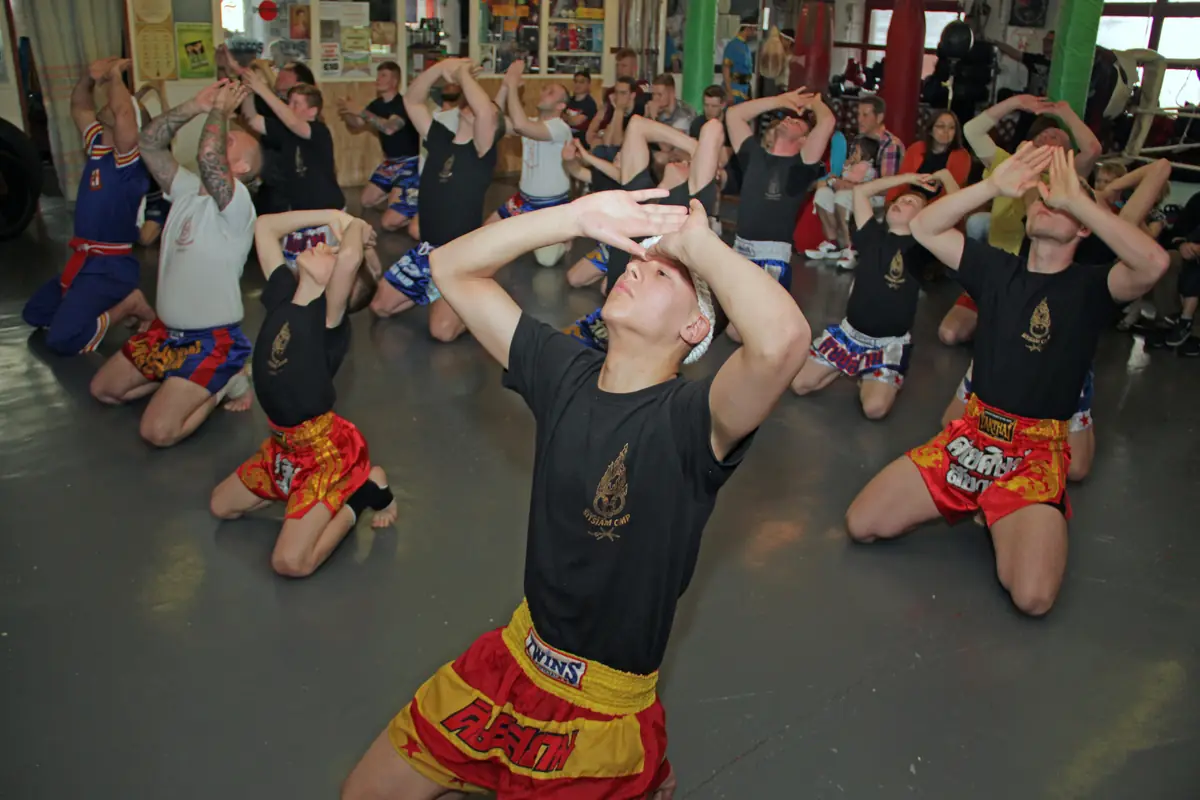
Wikipedia calls the Wai Khru Ram Muay a ritual that participants perform ahead of Muay Thai contests. Wai is the palms-together Thai greeting, khru means teacher and ram means dance, and the article translates the whole term as a war-dance saluting the teacher. It describes ram muay as choreographed movements that honour a fighter's teacher, parents and ancestors. Fighters also honoured the king through the same dance when royalty was present. For a visitor it is the first sign that what follows is a tradition as well as a contest.
What the fighters do
According to Wikipedia, fighters walk counter-clockwise round the ring, praying at each corner with three bows to Buddha, the Dharma and the monks of the Sangha. The choreography is said to draw on Hanuman. The routine is personal, ranging from very complex to very simple, and it can reveal the fighter's trainer and home region. You will see different versions on the same night, and that difference is part of what makes the opening of each bout worth watching.
The headband and armbands
Wikipedia says the mongkhon, also spelled mongkol, is a headband and the pra jiad are armbands, and that fighters often step into the ring wearing both before the match. They began when Siam was almost constantly at war, when young men tore strips from a loved one's clothing and wore them for luck. A trainer traditionally presents the mongkhon once the fighter is judged ready to represent the gym, and after the wai khru the trainer often removes it and places it in the fighter's corner for luck.
The music
The article on sarama calls it the music played during the pre-fight ritual, and says the name refers to that opening song. A band of up to four plays it: one pi player, two klong khaek drummers and a cymbalist. The pi chawa is a wooden, oboe-like instrument; the klong khaek are a pair of lace drums; the ching are brass cupped cymbals. The tempo begins slow and stately for the ritual, then rises when the fight starts, matching the crowd and the action.
What to do as a visitor
Treat the ritual as part of the night, not as a warm-up. A guide for new fans advises respecting all fighters regardless of who will win, and says cheering for your favourite is normal but shouting, ridicule or insults are not. It also says photos or filming may be prohibited at some fights, so ask staff before you raise a phone. The booking page asks guests to respect Muay Thai traditions and customs, which covers all of this.
Who this isn't for
Anyone expecting a staged ceremony with a fixed script will be disappointed. Routines are personal, the music depends on the stadium, and nothing here promises a particular fighter, instrument or version on your night. For a cultural show with costumes and a story, a cabaret or a dance performance is a different evening.
Frequently asked questions
What does wai khru ram muay mean?
Wikipedia gives it as a war-dance saluting the teacher. Wai is the greeting, khru means teacher and ram means dance.
What is the mongkhon?
A headband, also spelled mongkol, that fighters often wear into the ring. A trainer often removes it after the wai khru and places it in the corner.
What music is played?
Sarama, played by up to four musicians: a pi, two klong khaek drums and cymbals. It starts slow and speeds up when the fight begins.
Is the ritual included in my ticket?
Yes. The booking page lists admission to the Wai Khru Ram Muay ceremony in the ticket.
Can I film it?
Possibly not. A guide for new fans says filming may be prohibited at some fights, so ask stadium staff first.
Sources